If you’re deciding between hand-tied and machine weft extensions, the choice mostly comes down to one thing: how much hair you have at the root. Both types use real human hair. The difference is in the seam — how thick it is, how flat it sits, and whether your natural hair can hide it.
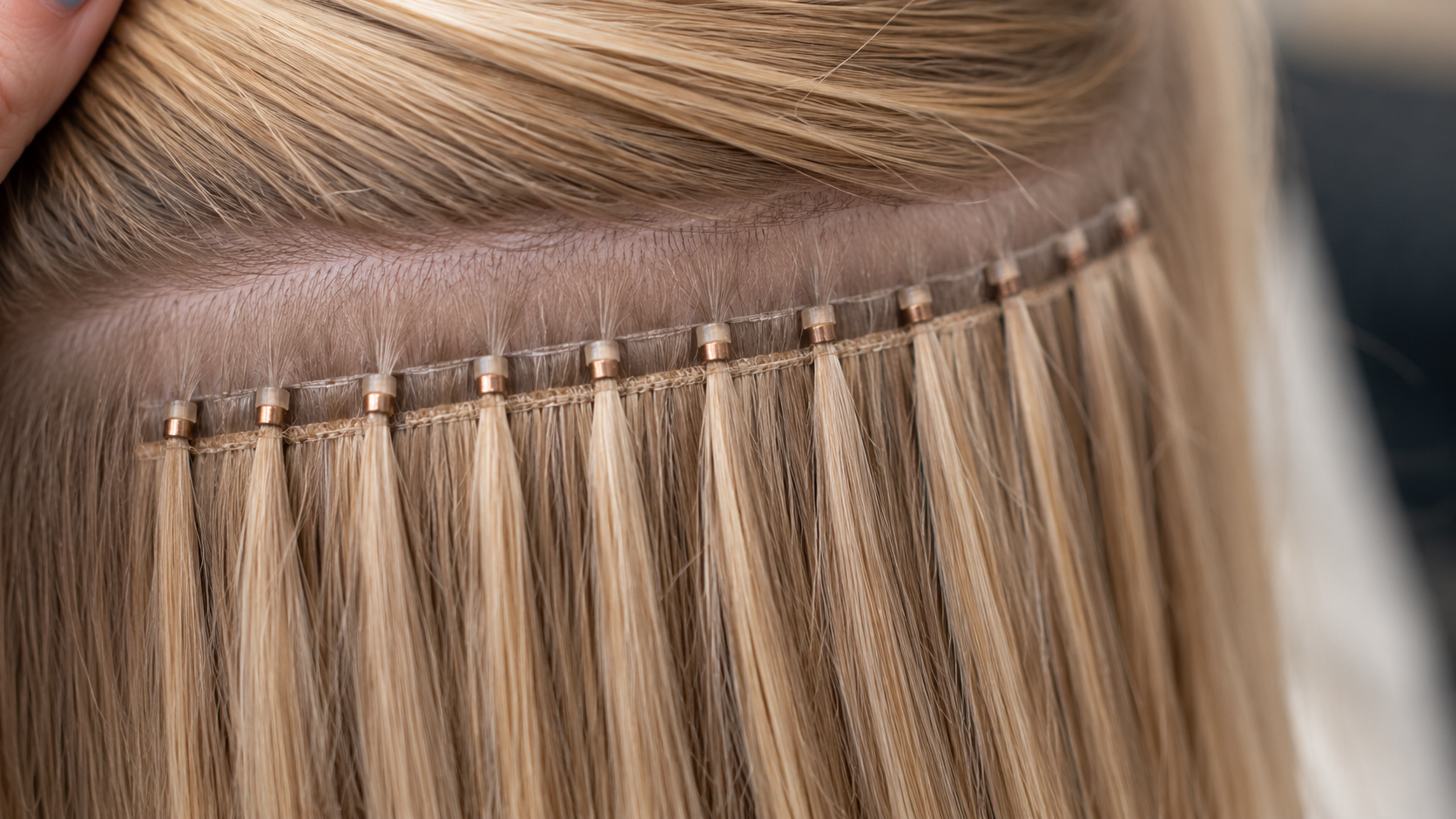
Hand-tied weft extensions are stitched by hand onto a single fine thread. The seam is about as thin as you can get — flat against the scalp, no ridge at the attachment point. That matters a lot for fine or thinning hair, where even a small bump at the root shows through. With hand-tied wefts, that problem mostly disappears.
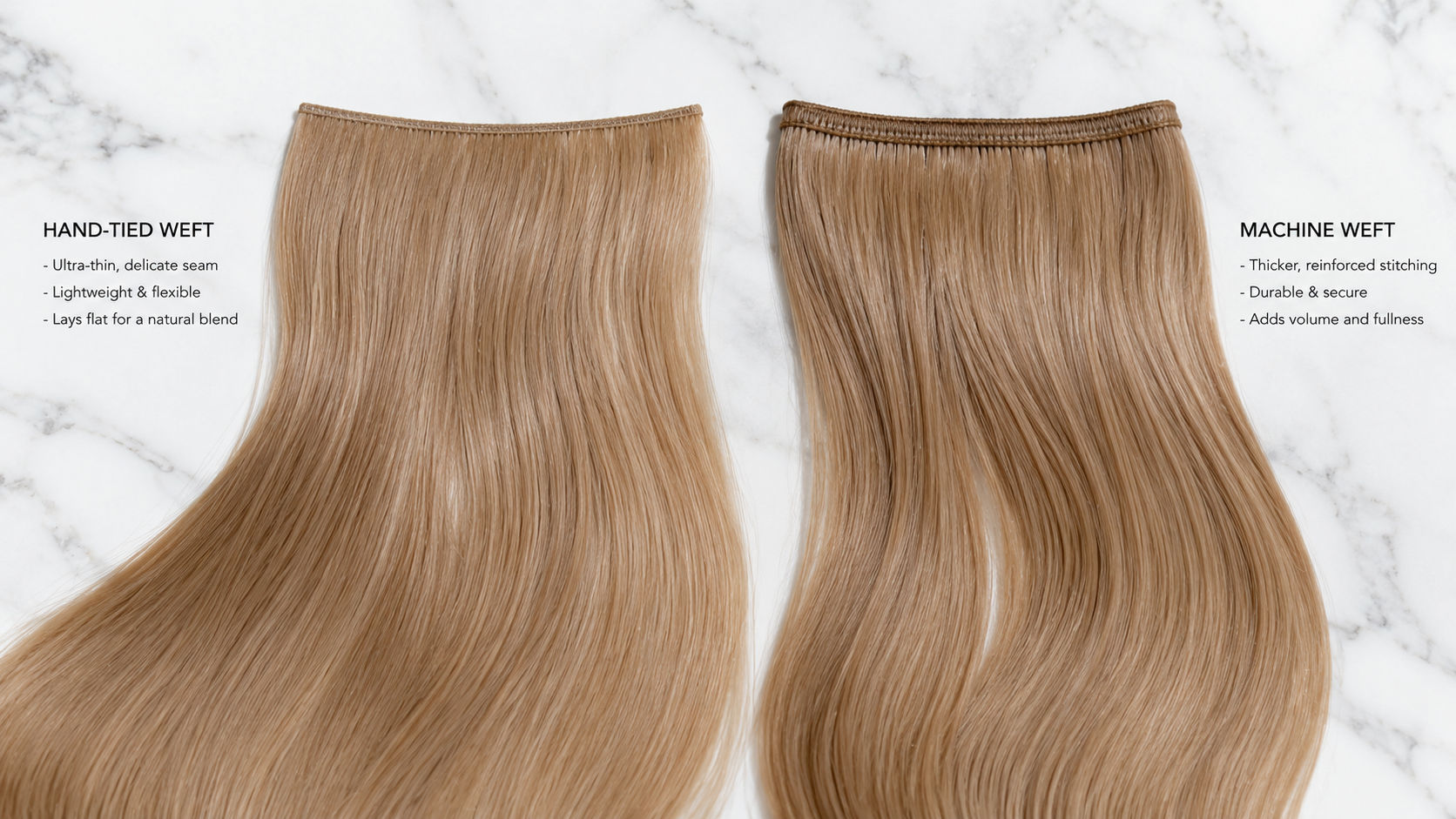
Installation uses a beaded-row method: silicone-lined beads placed along natural hair tracks, with the weft sewn onto those rows. A full head takes around 1.5 to 2 hours. The results are stylist-dependent — hand-tied work has a real learning curve, and not everyone who offers it has put in the hours.
Machine weft extensions run through an industrial sewing machine that stitches a reinforced seam across the top. That seam is thicker and stiffer than a hand-tied seam. It’s also what makes machine wefts more durable — they handle daily wear better and shed less over time. The tradeoff is bulk at the root, which is fine if your hair is thick enough to cover it.
Machine wefts are faster to produce, which keeps the price lower. For clients with medium to thick hair who want long-lasting extensions without paying a premium, machine weft is usually the practical pick.
How they compare:
Hand-Tied | Machine Weft | |
Seam thickness | Ultra-thin | Thicker, reinforced |
Best for | Fine or thinning hair | Medium to thick hair |
Durability | Moderate (cutting causes shedding) | High |
Install method | Beaded row + sew-in | Various (tape, glue, sew-in) |
Price range | Higher | Lower to mid |
Lifespan | 6-9 months | 3-6 months |
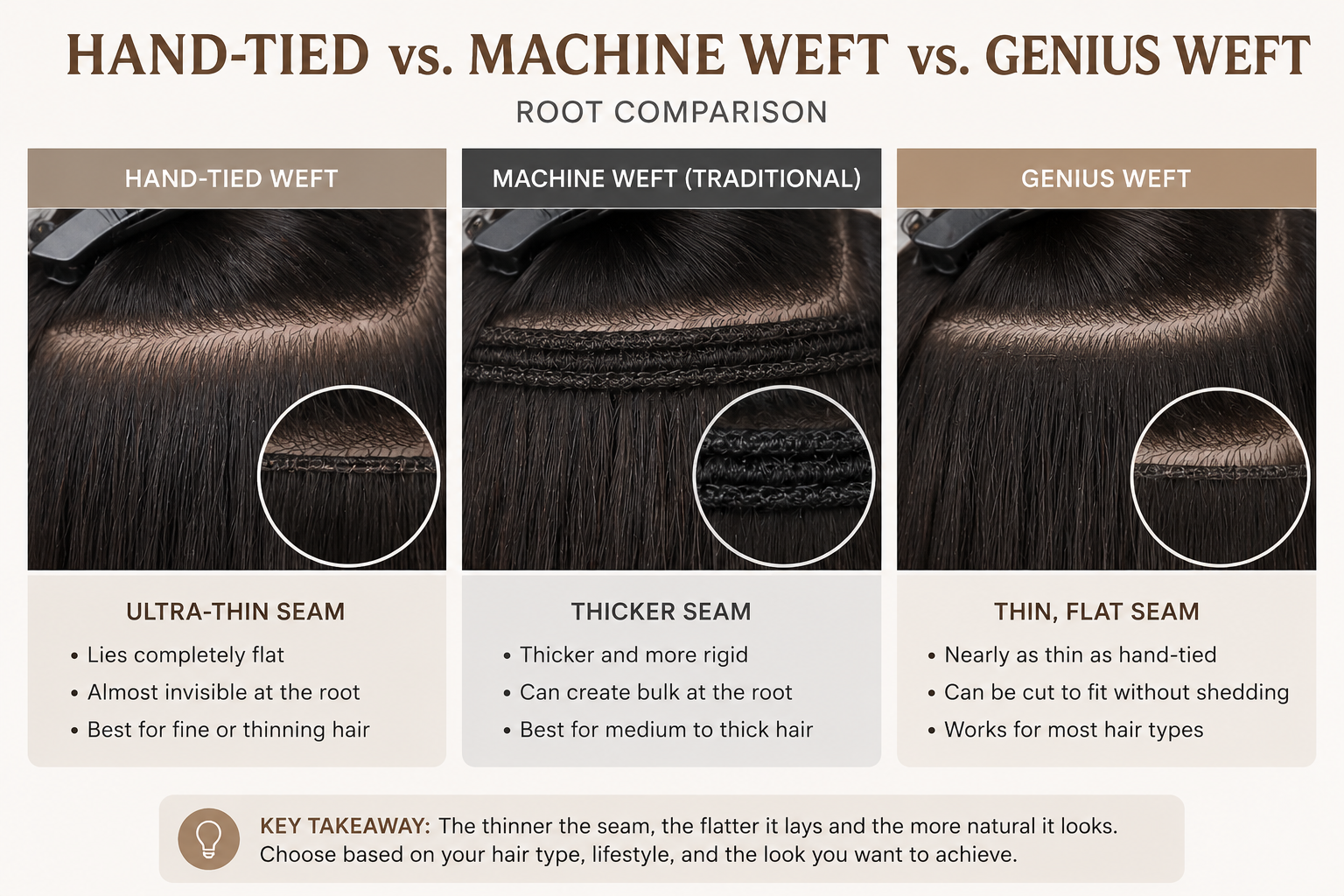
There’s a third option worth knowing about: genius weft. It’s machine-made, but uses a different stitching method that produces a seam nearly as thin as hand-tied. The practical advantage: genius weft can be cut to fit without shedding, which hand-tied wefts can’t handle. If you want a thin seam profile but need the flexibility to trim, genius weft is worth asking your stylist about.
Fine or thinning hair: hand-tied weft. The flat seam profile is genuinely hard to beat for clients with sparse roots. Medium to thick hair: machine weft makes more sense — better durability, lower cost. Somewhere in the middle, or you need to cut the weft to size: genius weft.
Regardless of which weft type you choose, hair quality matters more than construction. The weft controls how the extensions sit at the root. The hair determines how they move, blend, and hold up over months of wear. A machine weft in virgin human hair will outlast a hand-tied weft in processed, silicone-coated hair every time. I’ve seen clients spend more on the “premium” construction and end up with dull, tangled extensions by month three because the hair itself was low quality.
FAQ
Can I cut hand-tied wefts to fit?
No. Cutting a hand-tied weft breaks the hand-sewn seam and the hair sheds from the cut end. Stylists work around sizing by folding the weft or stacking rows rather than trimming.
Is machine weft a bad idea for thin hair?
The thicker seam is harder to hide on fine hair. Some stylists place machine wefts lower on the head where there’s more natural hair to cover the attachment — that can work, but it’s a workaround. Hand-tied or genius weft blends more cleanly on fine hair from the start.
How often do weft extensions need a move-up?
Every 6 to 8 weeks, as the natural hair grows out and the attachment point shifts. Skipping move-ups puts tension on the roots and shortens the lifespan of both the extensions and your natural hair.